Standard glasses sharpen your child's vision but don't stop their eyes from growing too long. Our myopia management program uses Ortho-K, Stellest™ lenses, MiSight® 1 day and low-dose atropine to slow nearsightedness, and we measure your child's eyes at every visit to prove it's working.
Myopia (nearsightedness) happens when the eyeball grows too long from front to back a process called axial elongation. Light then focuses in front of the retina instead of on it, so distant objects look blurry. Glasses fix the blur, but the eye keeps growing, and the prescription climbs year after year.
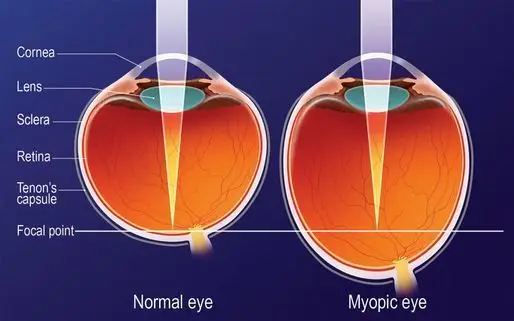
Every extra millimetre of eye growth stretches the retina. Children who progress to high myopia face significantly higher risks of serious eye disease as adults:
Risk rises with every diopter of myopia.
Higher risk of optic nerve damage with high myopia.
Stretching can damage the central retina later in life.
Earlier onset is linked with high myopia.
World-class technologies proven to slow myopia progression in children.
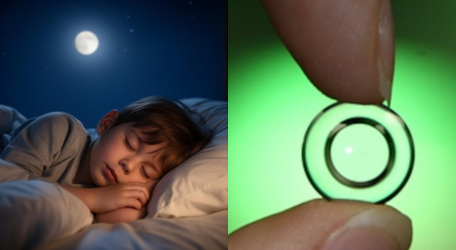
Non-Invasive • Overnight • Glasses-Free Days
Ortho-K uses specially designed overnight lenses that gently reshape the cornea while your child sleeps. They wake up with clear, natural vision all day, with no glasses or contact lenses needed at school or on the sports field. The reshaped cornea also changes how light focuses on the edge of the retina, which helps slow eye growth. Ortho-K is used off-label for myopia control and suits children mature enough to handle lenses with a parent's help.
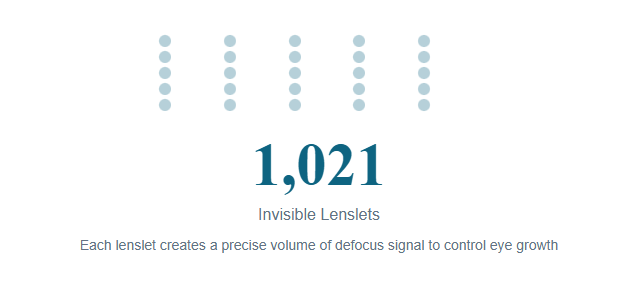
1,021 Invisible Lenslets
Stellest™ lenses use Highly Aspherical Lenslet Target (H.A.L.T.) technology: a constellation of 1,021 invisible lenslets that creates a volume of signal in front of the retina to slow myopia progression. In September 2025 they became the first eyeglass lenses authorized by the FDA to slow myopia in children who start treatment between ages 6 and 12. They look like normal glasses, carry no contact-lens infection risk, and work best when worn at least 12 hours a day.
Special Gold Medal — International Exhibition of Inventions
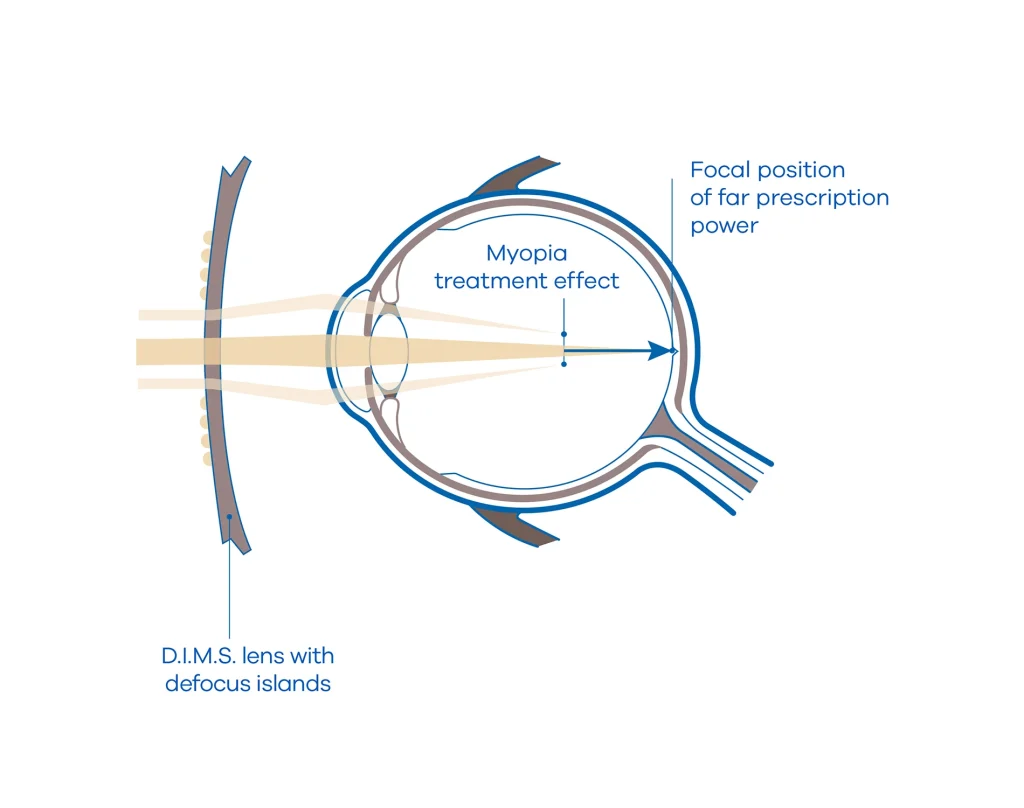
MiyoSmart lenses use Defocus Incorporated Multiple Segments (D.I.M.S.) technology to create myopic defocus on the peripheral retina, sending signals to slow down the elongation of the eyeball.
Answer six quick questions to see whether your child may benefit from a myopia control evaluation.
Simple daily habits that make a real difference in your child's eye health.
90-120 min/day
Research shows children need at least 90-120 minutes of outdoor time daily.
Natural light exposure helps regulate eye elongation and significantly reduces
myopia progression.
Every 20 minutes
Every 20 minutes of screen time, look at something 20 feet away for 20 seconds. This simple habit relaxes the focusing system and reduces eye strain.
Harmon Distance
Maintain proper lighting during reading and studying. Keep books at the Harmon distance — the distance from your elbow to your knuckle — for optimal visual comfort.
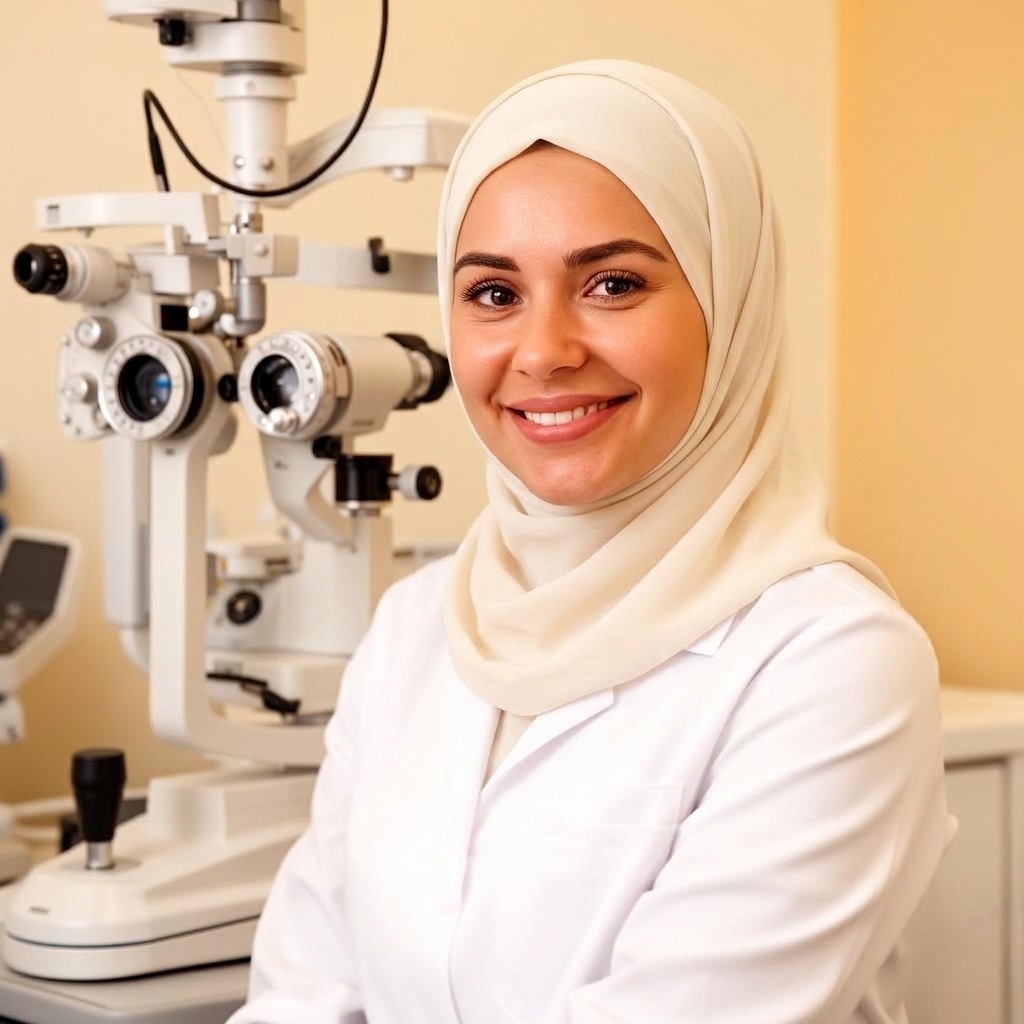
Expert Care
Our clinic is equipped with advanced optical biometry to measure the Axial Length of your child's eye. This lets us track eye elongation precisely, something a regular eye exam can't do. Every plan is built around your child's numbers and your family's routine.
Choose the clinic closest to home, work or school. Both offer the same comprehensive exam and diagnostic technology.
Regular glasses and contacts correct blurry vision but do nothing to slow the eye’s growth. Myopia control uses specially designed lenses or eye drops to slow how quickly the eye lengthens, so your child’s prescription rises more slowly and ends at a lower level.
As early as possible once myopia appears or the risk is clear. Eyes grow fastest between about ages 6 and 12, so treatment started in this window has the most to work with. Stellest lenses are FDA-authorized for children who start at 6 to 12, and MiSight 1 day for children who start at 8 to 12.
We measure your child’s axial length, the length of the eye from front to back, with an optical biometer at the first visit and at every follow-up. We plot each reading on an age-based growth chart. If the eye is growing faster than expected, we adjust or combine treatments.
Most children are seen every 6 months, with axial length measured at each visit. Ortho-K patients have extra checks in the first months: the morning after the first night, then at about one week, one month and three months.
Most vision and medical plans do not cover myopia control lenses, drops or monitoring visits, so treatment is usually paid out of pocket. Your child’s routine eye exam may still be covered, and FSA or HSA funds can usually be used. We give you a written cost plan before treatment starts.
Not yet. There is currently no FDA-approved atropine eye drop for myopia in the US, so low-dose atropine is prescribed off-label and prepared by a compounding pharmacy. It is widely used by eye doctors and can be used alone or combined with lenses.
Ortho-K is safe when lenses are fitted carefully and cleaned and handled exactly as instructed. As with any contact lens, there is a small risk of eye infection, which is why we train parents and children in lens care and check the cornea at every visit.
Most children continue until their mid-to-late teens, when eye growth naturally slows. We decide together once axial length readings show growth has stabilized, and keep monitoring for a period afterwards.
Schedule a comprehensive myopia evaluation today to find the right solution for your child, in Cary or Raleigh.